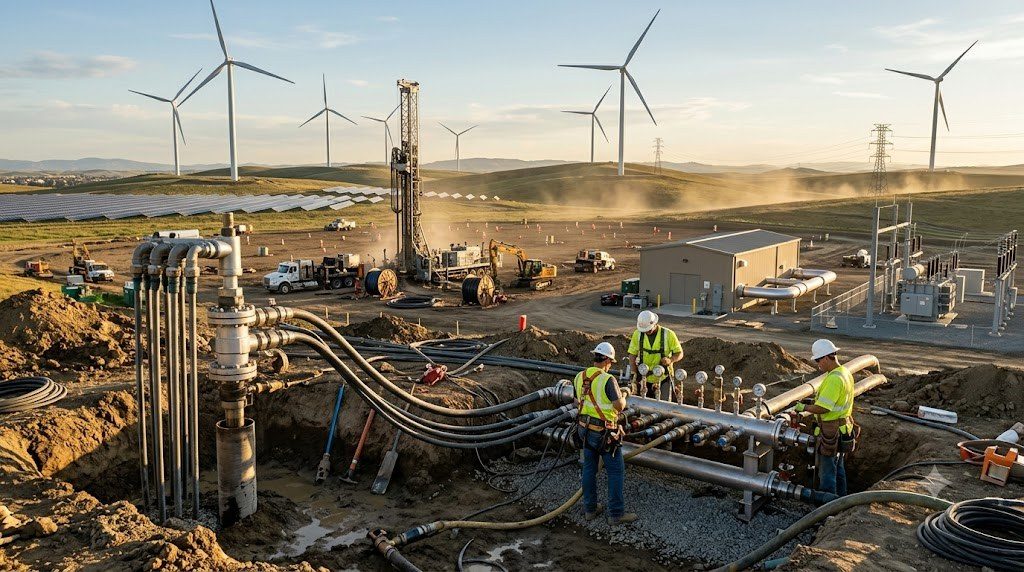
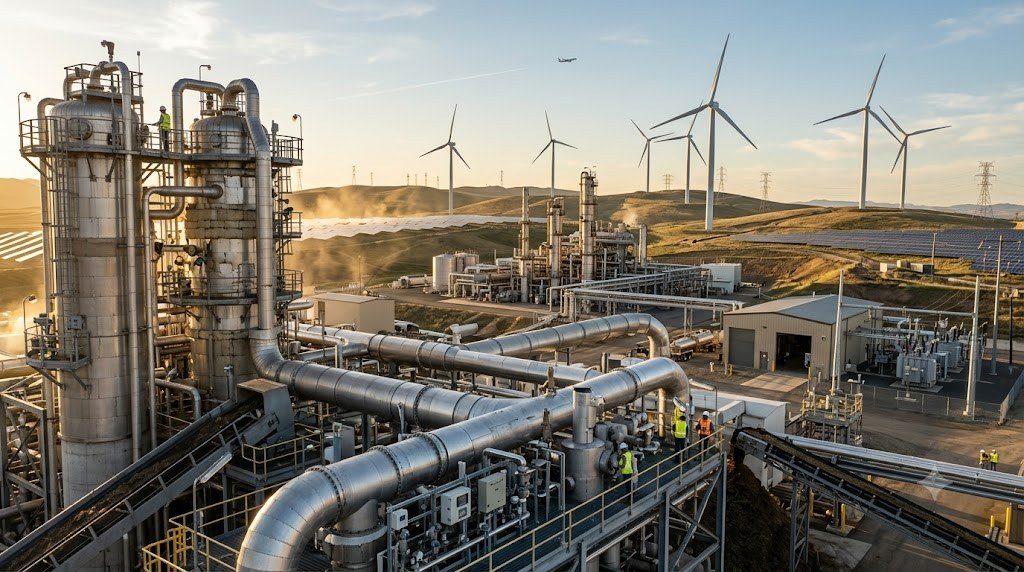
High-Temperature Geothermal Drilling, Mineral Scale Precipitation and Corrosion Metallurgy
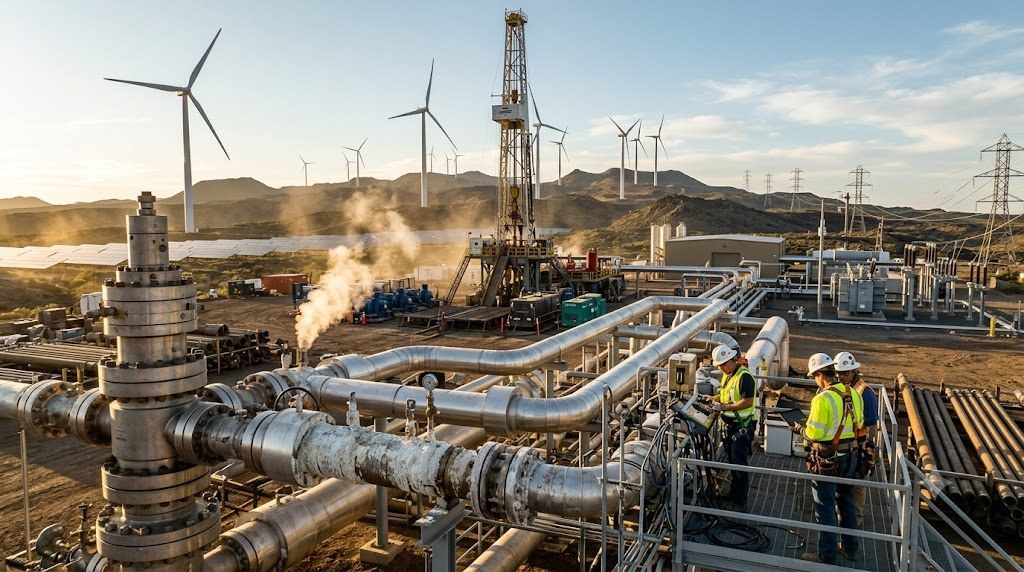
Accessing high-enthalpy geothermal energy—whether in conventional high-temperature volcanic hydrothermal fields or next-generation supercritical reservoirs exceeding 350°C to 450°C—pushes modern mechanical drilling and materials engineering to its physical boundaries. Unlike petroleum and natural gas drilling, which operates primarily in soft, sedimentary geological strata (sandstones, shales, limestones) at moderate temperatures (< 150°C), geothermal drilling must penetrate ultra-hard, ... Read more

Ground Source Heat Pumps (GSHP) and Shallow Geothermal Borehole Field Engineering

While deep geothermal power plants harness high-enthalpy volcanic steam or engineered reservoirs kilometers below the earth’s crust to generate electricity, the upper 100 to 250 meters of the earth’s subsurface represents a colossal, low-temperature thermal capacitor. At shallow depths below the seasonal thermal penetration depth (typically 10 to 15 meters), the ground maintains an extraordinarily … Read more

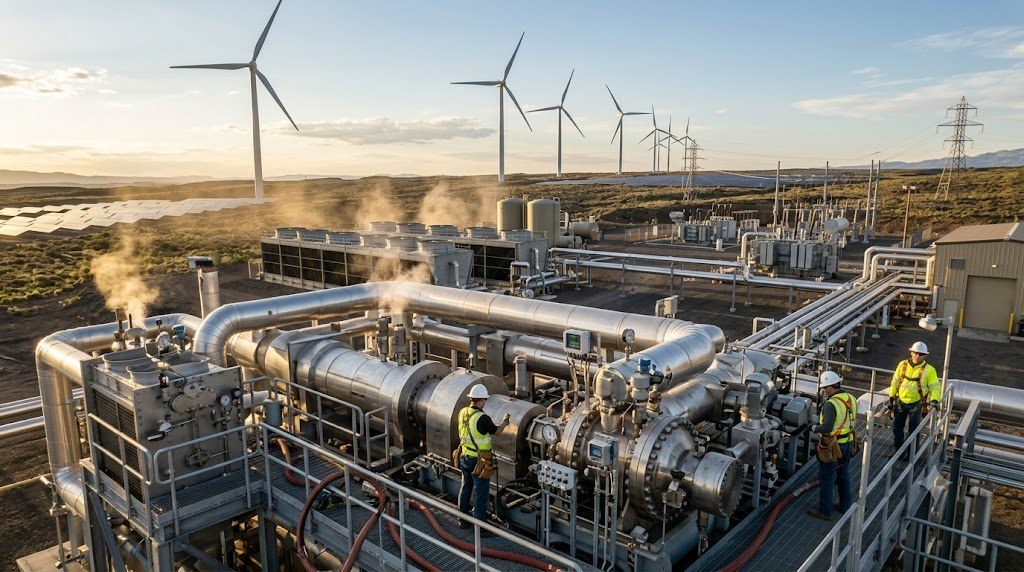
Binary Cycle Geothermal Power Plants and Organic Rankine Cycle (ORC) Thermodynamics

While rare high-temperature volcanic geothermal resources (> 220°C) can produce high-pressure dry steam to drive conventional steam turbines directly, over 75% of global accessible geothermal resources produce moderate-to-low temperature water and brines ranging from 90°C to 180°C. At these sub-boiling or low-enthalpy temperatures, water cannot flash into sufficient steam pressure to spin a traditional turbine … Read more

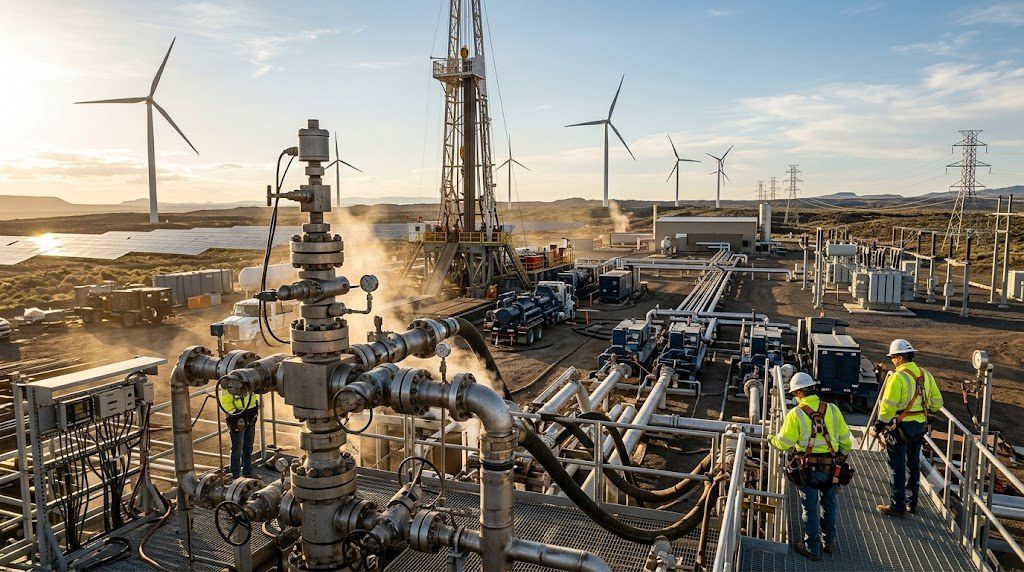
Enhanced Geothermal Systems (EGS): Hydraulic Stimulation in Deep Hot Dry Rock

Conventional hydrothermal geothermal energy generation has historically been restricted to rare geological volcanic anomalies—such as Iceland, New Zealand, the US Great Basin, and the Pacific ‘Ring of Fire’—where three natural conditions coincide: high subsurface rock temperature, natural aquifer fluid, and high rock permeability. However, this hydrothermal endowment represents less than 2% of the earth’s accessible … Read more

Second-Generation Cellulosic Biofuels, Enzymatic Hydrolysis and Sustainable Aviation Fuel

First-generation liquid biofuels—primarily corn starch ethanol and edible oil biodiesel—sparked intense global controversy regarding the ‘food-versus-fuel’ dilemma, arable land competition, and lifecycle greenhouse gas accounting. To transcend these ecological and ethical limitations, advanced industrial biotechnology has mobilized around second-generation (2G) cellulosic biofuels. Second-generation bio-refineries utilize non-food lignocellulosic plant biomass, including agricultural residues (corn stover, wheat … Read more

Thermochemical Biomass Pyrolysis, Gasification and Biochar Carbon Sequestration

Thermochemical biomass conversion represents a versatile, high-temperature engineering domain capable of transforming solid lignocellulosic forestry and agricultural residues into high-energy intermediate energy carriers: biochar, bio-oil, and synthesis gas (syngas). Unlike biochemical conversion (such as anaerobic digestion or fermentation) which operates at ambient biological temperatures over weeks and requires wet feedstocks, thermochemical conversion operates at temperatures … Read more

Dam Safety Instrumentation, Geotechnical Seepage and Spillway Aeration Hydraulics

Hydropower dams represent colossal civil engineering structures that impound millions to tens of billions of cubic meters of water, storing vast gravitational potential energy for clean power generation, flood control, and municipal water security. Because a catastrophic dam failure unleashes devastating flash flooding upon downstream populations, dam safety engineering represents one of the most rigorously … Read more

Wind Turbine Aerodynamics: Momentum Theory, Betz Limit and Aeroelastic Blade Design

The engineering evolution of utility-scale horizontal-axis wind turbines (HAWT) has produced monumental machines with rotor diameters exceeding 220 to 260 meters, capable of sweeping areas larger than six football fields and generating 15 to 20 megawatts from a single unit. Extracting kinetic energy from moving atmospheric air masses is governed by the laws of fluid … Read more

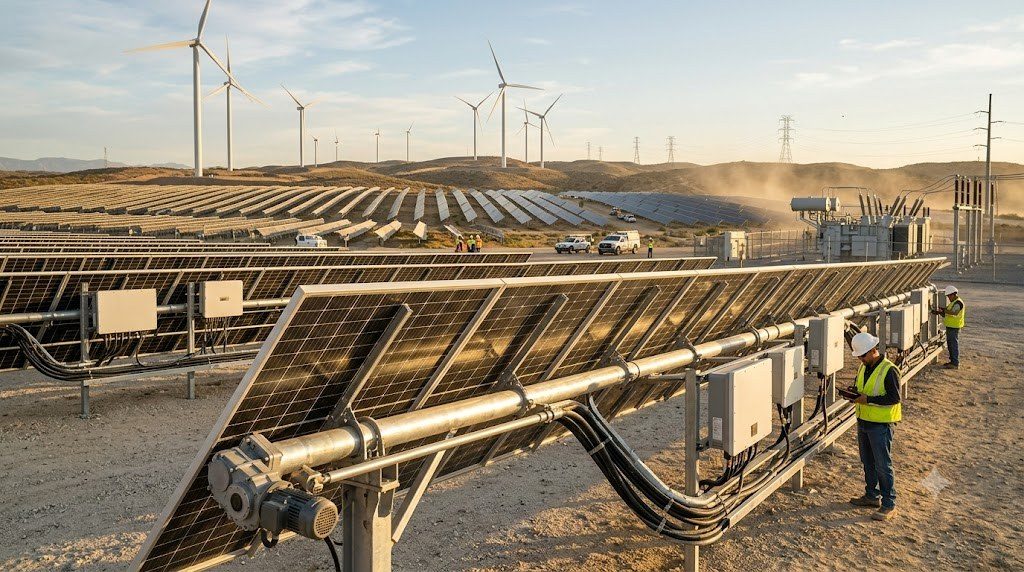
Bifacial Solar and Horizontal Single-Axis Tracking: Ground Albedo Dynamics

The global utility-scale solar industry has reached a technical inflection point where incremental cell efficiency gains must be coupled with structural and optical optimizations to drive the Levelized Cost of Electricity (LCOE) to historic lows. The integration of bifacial photovoltaic modules onto horizontal single-axis trackers (HSAT) represents the gold standard design archetype for modern multi-hundred-megawatt … Read more

Biomass Thermal Combustion, Fluidized Bed Boilers and Flue Gas Emissions Abatement

Direct thermal combustion remains the most prevalent industrial method for converting solid biomass into high-pressure steam for utility-scale power generation and district heating networks. Whether deployed in dedicated 100% biomass power plants or co-fired alongside pulverized coal in existing utility boilers, solid biomass fuels—such as forestry wood pellets, sawmill off-cuts, agricultural husks, and energy crop … Read more

About Renewlabai

About Renewlabai

Renewlabai is an authoritative technical resource providing in-depth analysis, comprehensive guides, and expert perspectives on Solar Energy • Wind Energy • Hydropower. We aim to equip specialists, practitioners, and enthusiasts with reliable, accurate, and actionable information.

Learn More →
Expert Research From verified industry specialists
Technical Guides Detailed workflows & analysis
Verified Quality Always updated & peer-reviewed